Thursday, February 2, 2012

The Insatiable Appetite of White-winged Doves

I will get to the doves in a minute, but may I just say that the dog and I have just returned from an afternoon walk, the dog in full pant mode and myself glowing with perspiration, (that seems the most polite way to put it), and it is ONLY Feb 1st! How will we ever survive the summer??

But I am not here to sing you the refraining chorus that plays in my head 24/7, “You will never survive this summer!” but rather, to share a few facts that are new to me, but common knowledge to anyone living with White-wing Doves in their neighborhood. First and foremost, they are bottomless pits!

How quaint that when we first moved in, I was afraid, due to the obscene number of cats that lived here, that I would never have any birds come to the feeder. How naïve, for now birds, particularly white winged doves are coming in droves and if I were to feed them as often as they empty the feeder, I would soon be in foreclosure.
Several sparrows help them in this pursuit, but because there are also cardinals and juncos, goldfinch and golden fronted woodpeckers, I hate to have them arrive to find the cupboard is bare, so out I go with another bucket of seed.


It turns out the White-wing Dove used to be mostly a tropical bird, which momentarily can make it seem exotic, but like so many other species it has pushed north and is perhaps headed to a bird feeder near you as we speak. They are gregarious grain eaters and love to arrive en masse. And although they prefer to forage on the ground, several of them seem willing to hang on to the feeders, perch on top of the feeders, consequently knocking a lot of seed on the ground where they can eat it in their preferred manner.

Possibly, they may provide some entertainment when the nesting season comes, for at least some of them are likely to nest in the junipers. The nest is not an elaborate affair, mostly sticks, but I read that the male is very particular about which stick he offers his lady, so watching them chose and discard sticks may provide some amusement.
They also are known for their broken wing act when predators are around, so again, something to watch for. And, if its really too hot to do anything else, I can look deeply into their eyes to see if they are adults or young doves. The adult’s eyes are crimson with a blue ring, while the young have brown eyes, hold the ring. Which now that I am looking at them as I write this, most of them seem to be brown eyes. Hmmm, guess I will have to search out crimson eyed ones. Finally, if I can attempt to train my ears to hear the difference in their calls, their usual “who cooks for you” (which where I come from is attributed to Barred owls), can also be a drawn out “hooooh ahhh” if a predator is nearby. With the remaining feral cats still abroad, one would think they might do some “hoohahhhhing” at some point. Mostly I am curious is if sounds anything like the Army Ranger “HooAh!”. Probably not.

See the silly things you fill your time with, when you are not sure what to fill your time with. I will be thrilled to be going to an open house at a nature center 20 miles from here on Feb 8th. They are looking for volunteers for their education program and I can’t wait to put up my hand. It should provide a great way to learn about the Texas flora and fauna and be a great escape from the daily confronting of my non-domestic talents. So stay tuned to see if this little transplanted buckeroo can find a new direction.

Friday, January 27, 2012

Writing as Catharsis

I guess I would have to say I am still experiencing displacement issues. It’s been three weeks, and somehow I thought I would have been more acclimated by now. Perhaps writing the blog, even though I don’t have a lot of new nature to share, might be something that can feel like my former life.

I take that back on not noting any new species, one new species that has been more than abundantly prevalent has been the “Friendly Texan”.
Living up to their press as a more than welcoming people, I have found even a simple phone call to find out where to get my dog’s nails cut ( admission, in the past, I have done it myself and had the kitchen look like a blood bath had taken place, so now , it is the one thing I can afford the luxury of “trickle down economics” ), led to a lengthy discussion of how to cut an aging parrots talons, then on to “Welcome to Texas, but just one word of warning, don’t drink the water or give it to your dogs either”. Ah, good safety tip, I take it, it is so full of limestone that my innards would start to grow stalactites.

Another conversation with a neighbor included the interesting admonishment that I should be sure to feed the resident feral cat, or cats as the case may be. Hmm, out of kindness and compassion? “Well no M’am” and I don’t want to scare you, but that white and orange one killed a copperhead and rattlesnake in your yard last summer so you want to keep him on your side”. O.K. Makes me think twice about tiptoeing through the ivy to retrieve a bird feeder that keeps falling there.

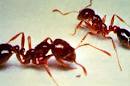
And EVERYONE has warned me about the heat. “Oh you just wait, in a couple of months you’re going to die!” Nothing I wasn’t aware of, but now so many people have told me that that I feel I should start work on my own eulogy. Other’s ask me if I have encountered fire ants yet, which I have a feeling are perhaps everywhere but in a winter slow down at the moment. I suppose all the critters of summer will be something to blog about when they start biting with a vengeance.

Just yesterday I joined a group of people who are in a Master Gardening class, no room for me to take any gardening until next Sept, but again, they were also willing to fill me with information. Most of which went over my head, you know, when you are so new you don’t really even know what to ask. I was trying to figure out which of the lifeless bushes in my yard needed pruning and which were to be left. Unfortunately by the time the kind gardener was done telling me this abundance of things, the bushes were all cut so I am still not sure what they were. Yet I went at it today cutting things to the nub that either will return lovelier then ever, or disappear and not be a worry anymore. I am truly hoping for the former over the latter.

So onward and upwards hoping one day to transition from that ache of missing home to feeling this IS home. It will come. Probably just in time for me to expire from the heat, wouldn’t that be a pity.

Wednesday, January 18, 2012

Starting at Zero

Moving is a humbling experience. In my case, at any rate, it brings out all my inadequacies for general display; that I don’t know how to organize an overabundance of unwanted possessions, that I haven’t a clue how to shop to replace the unwanted ones nor clout enough to convince my husband that they need replacing and that the idea that I will just resume my role as happy naturalist is maybe a tad naïve. But it will be the attempt to teach this old dog some new tricks that will be my salvation. At least that is the hope.

But I am starting at zero, or almost zero. I know so little about the flora and fauna about me, but shall attempt to pass along what I am learning as I learn it. For instance, I who lament the loss of an ocean realize, if only I had arrived in the Early Cretaceous, about 150 million years ago, I would have been seaside, on the edge of the ancestral Gulf of Mexico. I suppose I also would have been a light snack for a T Rex so just as well that wasn’t my timing. And because it was once a sea teeming with marine life, many of which lived within calcium carbonate shells, the land now is turned to limestone and wherever you look or walk the ground is littered with rocks and outcropping of rocks. Rubble like, not a lot of soil.

Yet in this thin soil somehow Live Oak and Ash Juniper
grow in abundance. We chose the house we chose for the very fact that it had several of these lovely twisting oaks filling the view from each window. They have small sturdy leaves, good presumably for holding onto the water content when it comes, and the acorns they produce are on the main menu for the omnipresent white tailed deer, and if they don’t eat them all, then they are also enjoyed by turkey and jays, titmice and woodpeckers. And the jays are Western Scrub Jays not my blue jay of the east and two have deigned to finally come to some feeders I put out a few days ago. Lovely and slender looking I hear they have a distinctive call; I shall have to listen for it.

I also am lucky enough to have a couple of Golden Fronted Woodpeckers, which are very reminiscent of our Red bellied woodpeckers on the Cape so they feel like a touch of home. Juncos and cardinals too are further down in the yard, but their reluctance to come closer to the house is probably best explained by the fact that there used to be about 10 cats living here! Not sure how long it will take them to get the “all clear”.

My morning quests see me out trying to find a place to let my dog run off leash. He and I are far too spoiled by our previous life to give this up completely, but I am beginning to see the writing on the wall. I am afraid that thanks to the omnipresent deer and my dogs insistence on chasing them, he and I will be chained to each other for all walks here, which is so sad to contemplate. It also means I can expect, after a certain time, to have a left arm several inches longer than my right. But I have been warned of snakes and scorpions, skunks and coyotes, all of which I would consider a treat to see, but I guess I can’t risk it. Why is it so hard for yours truly to accept acting like a responsible adult?

I have driven some places in search of off leash venues, and today I did go to a small park, which had the one big perk of open land without deer, not a lot of room to roam, but it provided my most three star sighting so far. A Red Shouldered Hawk sitting atop someone’s totem pole décor. Gorgeous rufous breast feathers, narrow white banding on its wings and it seemed completely nonplussed by my staring. It’s only a winter resident here in this part of Texas so I shall consider myself lucky to have seen it.

Well then, I am starting at zero, but hopefully I will have some sort of a learning curve here and in time, in time, I shall find the beauty here. But a time of mourning my old life and setting is only natural. Still, may even the act of writing this bring a little cheer.

Wednesday, December 21, 2011

The "Green" Winter Woods

The Cape is fairly famous for it’s “gray” winters. Gray weather-beaten shingles on the houses, gray-looking marshes once all the fall color is drained away, and gray weather often dominates the winter months. People who don’t get out much see it as the Gray days of winter. Ah, but if you actually go out into those “gray” woods, you might be surprised to find out how “green” they really are.

Before I left the Cape, I brought my camera along with me as I walked the woods behind the bog, with the express purpose of capturing the green. And this is what I found, for starters, electric green moss, made even greener by the dull brown of leaves it shines out from. There is a velvety-green kind of moss that looks like felt that I was never able to get the scientific name of, and then the bushier one commonly called “Goldilocks Moss”. I love watching moss through the year, how it slowly develops its spore capsules, how the dying circles on the moss sometimes give you a clue to where certain animals have “left their mark”. Even just noting all the different kinds is entertaining, even if you don’t know what “kind” they are. I will miss moss in Texas.

There are also all manner of plants in the “wintergreen” family, meaning just that, that they stay green in winter. One that smells like teaberry when you crumble it, called “dah” “teaberry” but also “checkerberry” and simply “wintergreen”. It has a bright red berry that is edible and works as a breath freshener, very wintergreen-like in its taste. But before you go gobbling berries be sure you have the right one.

Another related wintergreen, sometimes called Spotted Wintergreen but also the much cooler sounding, Pipsissewa, stays green throughout our winter. When you see it, the fact that it is clearly striped versus spotted makes you wonder about the eyesight of those original botanists. But I found out that the “spotted” part of the name really means, “to break up” and comes from the fact that Indians used this to “break up” kidney stones. Either way, it’s a lovely plant found in the herb layer and as green in February as it is in June.

All along one trail I take is the pale green, always looking like it needs water, Sheep Laurel, or “lambs kill” for this is a plant one shouldn’t nibble on, at least, not if you are a lamb. Its drooping leaves help it to retain water but tends to make me want to drag out the watering can whenever I see it.

On the Cape thanks to our good air quality, the trees are all coated in green lichens. Lichens of every sort, crusty round patches of sage green, lots of “fuzzy ones” called “Old Mans Beard” or “Bushy Beard” that grow on the bark but do the tree no harm.

Like the epiphytes of the rain forest they get their moisture from the air. In a clever blending of two plants into one, algae and fungus, they can both hang on and make food without taping into the host plant itself. The popular pneumonic to remember this, is “ Freddy Fungus and Alice Algae took a Lichen to each other”. Well, on the Cape they took a lichen to each other in a big way and are a large part of why a gray wood, looks more like a sage green wood in winter.

Add to that the wonderful Reindeer Lichen that often covers the ground near the trail and again you have everything but a gray wood. Reindeer lichen is way cool, first because you can imagine you are on the tundra and real reindeer are right over the ridge, plus, they are such barometers of moisture in the air, that on a dry day they will feel all crunchy whereas on a humid day they are soft as can be.

Of course there are pines to add to the green, and holly. Pitch pines, and white pines dominate our woods, and the holly makes it only about 20 miles further north than the Cape and then says “uncle” to the cold. But the Cape is warm enough for it, and the robins and other birds love the berries, which get a good fertilized start on life when they pass through their digestive system, so hollies crop up everywhere. Oh the “Holly and the Ivy”, a great song to hum to yourself while you leave the mad commercial dash of Christmas and revive yourself in the “green” winter woods.

So, if this winter looks to disappoint in the way of “I’m dreaming of a White Christmas” why not take up a new tune, “I’m dreaming of a green forest” just like the one I used to know. Oh, that might be too close to home for me, for I am presently in Baltimore, about to head to TN for Christmas and then on to Texas, where I will dream of the “green forest I used to know”.

Saturday, December 17, 2011

A Christmas Gift of Otters

I am aware that I have written about otters before, my overwhelming desire to actually see a live otter on the Cape, not just their scats, their tracks, their den holes etc. I also have shared with all of you that I am a Yea God sort of person, who looks for God’s glory every day and always seem to find it. It’s goes without saying then, that I am also a “Yippee Christmas” sort of person who revels in the whole season, not just the day. The delight of every ritual that goes with it, the baking, the overly long Christmas letter I burden the world with, the mass production of peanut butter balls. I love it all.

But I also love that each year I can point to a pre-Christmas day that I feel I received a very personal, hand-tailored-by-God-for-me, sort of present. Last year it was coming upon a tree just loaded with Cedar Waxwings on a snowy day. Gorgeous, and so abundant I immediately recognized my Christmas gift and thanked God. And this year, it was the amazing gift of otters. I had been thrilled, and a little spooked that in August I had come upon that wonderful noisy otter in the containment pond at the bog. The spooked part was that I had begged to see an otter before I left the Cape, and on that very day we would get the call that would set our exit in motion. So, in my mind, the sighting on that day was a gift, a wonderful gift of answered prayer.

But as you all know, I got to drag my exit out, these three, almost four, months that have seemed like the best gift of all, have just come to an end. But before I left the Cape for the final time, I was given two incredible days of abundant otter sightings right out my window. A pair of otters had taken up residence, at least for the while, just three houses down from where I am on the lake. Remember, this cottage has a wall of windows, so the rising sun, the waking world, the sleeping swans, etc have all been mine to delight in from the moment I get up in the morning, which usually is before dawn.

What a treat, what a thrill, to look out one morning, and catch that distinctive V wake in the water, with a small head and a fast moving tail propelling the animal forward. An OTTER! And then another right behind it! They swam out together to a spot that was a few hundred yards from shore, dove down and then, after I assume, catching a fish, headed back to shore. The trick was they would always be out of sight by the time they made it to land, so I didn’t know if they were taking whatever they had caught to eat it under the dock, or if they had a den or what. But within minutes one or the other would be heading back out to the same place in the water to do that all over again. Swim around under water then beeline it back to shore. They really are such strong and fast swimmers. Amazingly this went on in the morning for over an hour. And as the light increased I could see their heads more clearly, but could never make out whether they had a fish in their mouth or not.

So many questions came out of this, unanswered as always, but fascinating all the same. Were they carrying the food back to shore to eat it there, which makes sense, but I was just amazed I could never see it, even though I had a decent look at their heads. Was it clutched in their front paws? Surely it didn’t seem to slow their progress for they were zipping. And how was it that each time, and I amazingly got to see this happen each morning three days running and once, on a rainy day, also at lunch time, how was it that they always went to approximately the same place to hunt? Surely a school of fish moves about, you would have thought there was an underwater Long John Silver’s under there providing a steady source of food. Oh, to have an underwater camera set up! And to have had the nerve to go trespassing and see where they were heading. But it is private property, so even under the cover of darkness, I didn’t think I should go lurking about in their yards. It shall just have to remain a mystery. But clearly this is my Christmas gift from above, such an abundance of otter sightings on the very last few days I was there. Thank you God!

Again this is one of those more personal essays than one loaded with enriching facts, but I did learn something new about otters as I read up on their feeding habits. Their scats are very loose and runny and full of fish scales or crab shells or whatever they ate, we have shared that before, but what I didn’t know is, that they have such a fast digestive system that the whole meal passes through them in an hour. Like the fast digesting Gink of Shel Silverstein lore…

Quick Trip

“We’ve been caught by the quick-digesting Gink,
And now we are dodgin’ his teeth…
And now we are restin’ in his intestine,
And now we’re back out on the street.”

I also know that otters cover a large home range. To assuage their hearty appetite they must cover a lot of ground going from pond to bog to marsh etc in search of food. Unless it is spring and they are having their pups they don’t remain in one spot for that long. So my being treated to days of sightings was such a stupendous gift, with such perfect timing that it is clear to me who the Sender was. Again thank you God!

Although it is true I have left the Cape, serious boo-hoo here, I still have a few Cape blogs bantering around in my brain which I shall try to find time to write, and then, together, we will learn the delights of completely changing habitats and a chance to discover a whole new set of wonders, at least when Internet access and time allow. Meanwhile, Merry Christmas everyone and may some Glory of God presents come your way too, free for the asking. Even with an economy in the tank, God’s gifting ability is never curtailed!

Sunday, December 4, 2011

Eastward Bound

Living on the Cape, it is pretty hard to be Eastward bound, 40 miles tops and you would be in Provincetown and end of journey. Unless, of course, you are an Alewife, a stout member of the Herring family. The annual spring migration of these herring from the cold waters of the Atlantic through small streams that lead to the freshwater pond of its birth is a true rite of spring on the Cape.

It’s an anadromous fish, which means it spends most of its life in salt water, but returns to fresh water to spawn. One of those dazzling tricks of nature where no one knows exactly how they manage to find their way from the wide Atlantic to the one tiny stream that will lead to the pond they were born in. The fact that it takes them 3-4 years to mature to spawning age means this encoded info, this smell that smells like home, has to stay with them all that time. It is thought to be an olfactory trick, for every stream, brook, river has its own chemistry. Clearly they have a better memory for such things than I do. No GPS, no AAA maps, yet year after year they find their way.

But it isn’t the spring migration that I mean to write about in December. Rather it is the rather astonishing fact that while walking along the stream that leads from this bog pond, through a salt marsh and out to sea, I saw schools of small pale fish in the shallows. They were definitely heading downstream and there were so many of them that it seemed to me, they could only be herring, but this late in the year? It just shows how many mysteries remain for me. I had always looked for them in the spring and remember seeing schools of fish in the ponds in early fall that I was sure were the herring, but again, December! Late bloomers? Eggs that for some reason didn’t hatch in the usual one week it takes, or is there some other fish I don’t know about that also spawns in the pond and heads back to sea? Sorry that this is one of those essays where I will just share my questions with you without having the answers.

I do know that the female lays about 100,000 eggs, the majority of which will be a tasty part of someone’s food chain. For that matter, at the end of this herring run, in the phragmites that line the marsh, I found an otter hole. As usual, that premier naturalist, my dog, led me to it. A wonderful multi-hole system and a trail littered with otter scat, the silvery shiny scales of fish. What better place to hang out then the exit ramp for herring. Little bite-size, fish nibblets right out the door.

As far as the human food chain, I believe it is only the Wampanoag that are allowed to catch them now, for like so many other species, their numbers have been declining steadily. I have a faint memory of coming to the Cape as a child and catching the herring with our hands and tossing them in buckets. And the pilgrims claimed you could walk on their backs to cross the streams. Not so now. For that matter, when we first came here and found out there were “Herring Wardens” my kids thought that was a riot. Certainly a profession they hadn’t thought of adopting until they arrived. Wearing a “Herring Warden” badge would be the ultimate in macho authority!

Well, it is December, and clearly there are things I should be doing other than blogging. Nine days to my Westward bound journey and so much to do, so many places to see one more time plus Christmas cards to write, presents to buy. However, should I find an answer to my questions about the identity of these herring look-a-likes, you shall be the first to know.

Wednesday, November 23, 2011

Water Wars

I suppose war is a strong word, lets just say, “water skirmishes” have been taking place over the last week on Cedar Lake where this cottage is. Interloping swans have tried to make their moves, both on the lady swan here and the territory and it has led to some lively displays.


“So sorry, this female is taken, this lake is taken” might be the gentler way to handle this, but swans don’t really go in for gentle hints. Rather, at the first fly over of any other swans, this pair, first the male, then the female, puff those wings up in what is always a lovely sight, but definitely portends trouble.

The first interloper this week was a lone male, probably a young one, not yet mated, and he defiantly seemed to be making a pass at this female on the pond, which also is probably young. When I first arrived here in August, she was alone herself. I went away for 10 days and came back to find a suitor had arrived and been accepted. I don’t know if it is typical for young swans to try and steal another’s mate. They do generally mate for life, but who knows, maybe there is a trial period or maybe this male just had a lot of audacity.

At any rate, the reigning male would have none of it. First the high-speed, wings-up, charge followed by a race along the surface as he gained speed, and then the aerial chase. Wow, it was something. Wings beating the air noisily, sharp turns as he chased the male one way and another. All under the watchful eye of the young lady in question who also kept her wings fluffed up and stayed true to her man. The vanquished male finally took the hint and hasn’t reappeared since. Swans do mate for life, although there are occasional separations, but the human divorce rate is far higher then the swans, so perhaps she has made her choice and will be true to “till death do we part”.

A few days later, not a lone male, but a pair arrived, one of which still had some gray in its plumage. Probably another young couple looking for a place to call their own until the ice arrived. They landed on the far side of the lake. Instantly the resident pair went into action. Up went the wings and it was clear this wasn’t the Welcome Wagon arriving.
The new pair lifted off, flew to the far side but that wasn’t good enough. The huffy swans were heading their way and without arguing further the new pair left, continuing their search elsewhere.

And you see, that is the trouble with swans. I know I have written about this before, that they are an invasive species here in the US. Europe is their home, but they were brought here to look fetching on some rich person’s estate and now we have zillions of them. Because they are so territorial, even more so during breeding season, our local waterfowl are often driven off. The display I saw this week exemplifies what goes on in the ponds in spring and it seems, to some degree in the fall too.

I am guessing here, but I suppose a larger lake like this, and it is really more like a large pond, is preferred to the many kettle hole ponds that exist on the Cape for it probably won’t freeze up as quickly. Once winter has really set in, and all the fresh water is frozen, these swans will congregate far more amiably on the salt marshes and estuaries. Last year we must have seen 100 swans on an estuary in Mashpee.

As I write this there is mist curling over the water brought on by a cold night and the swans are right in front of me and seem intent on sleeping in. The small trio of Grebes is diving close to them but the swans barely raise their heads. Ring necked ducks and Buffleheads don’t raise the eyebrow either. Perhaps in the fall they are just intent on keeping other swans who might compete for their food, off the lake.

Well, I am supposed to be on the road to Baltimore for Thanksgiving with my family. Better close up the computer and get a move on. Happy Thanksgiving everyone, and may the blessings of this beautifully created world, free for those who chose to see it, be yours now and always.