Saturday, March 21, 2015

Courtship Season for Cardinals


Snow may still be on the ground, but LOVE is in the air.  Cardinals are so ubiquitous at our feeders that it is a great bird to practice your bird behavior watching skills on.

Over the winter, perhaps you had several pairs coming to your supply of seed, and if you were watching, you might have noticed the male is slightly aggressive to the female.  Nothing of a domestic violence order of course, simply that the female usually gives way to the male.   You may have been lucky enough in winter to see several pairs at the feeder at once.  For many territorial birds that need to defend their territory is only present in the breeding season whereas winter time is a time to gather in flocks.

As early as mid Feb you might have noticed a difference.  They were beginning to travel in pairs, and, as love can often “break up that old gang of mine”, so does the increase of hormones begin to change this gregarious flock into one prone to border skirmishes.  For some time now, in Texas, I have been watching chase scenes of male cardinals after males, and females after females. 

And isn’t that interesting, as the pairs mate for life, mostly anyways, they seem to have divvied up the “defending hearth and home” responsibilities with each of them chasing off members of their own sex.  “You go get him Harry!”  “She’s all yours Harriet”.  Watch for it, two red males careening through the trees and in other cases, two females chasing and “chipping” wildly.


 It is that loud and excited chip that should get your attention.  When you hear it something is up.  It may be defense of territory, but it also may mean danger. Look for cats, or the smaller hawks like Coopers and Sharp Shinned that prey on smaller birds.  Soft continuous chips are the pair keeping track of each other.  They do this pretty continually and in the book, “What the Robin Knows” by Jon Young, he tells a heroic story of a cardinal that noticed his mate had stopped chipping, only to see she was frozen in fear and in the path of a hunting hawk.  He said the male swooped right into the path of the hawk, surprising it to where neither did the hawk get the female but the male got away also.  Shew; an impressive display of mate loyalty!

Just a couple more things you might see in this season of love:

-Male cardinals feeding the female.  Totally a tender moment as he picks out a choice seed and offers it to his mate.  And bless him, he doesn’t drop this behavior once the honeymoon is over, but will often feed her in a similar manner as she is incubating the eggs.

-Aggressive hormones are elevated now, and as much as the male will chase off a territorial intruder, both males and females will fight relentlessly at that pertinent cardinal looking back at them from your window, or your car mirrors.  No matter how much they batter the glass, this guy isn’t going away!  Do them a favor and cover your rear view mirrors with plastic bags, or put paper up in the offending window.  When the hormones drain away, so will the window battering.  Although, can you believe it, there is a record of a female battering a window every day for 6 months!!  Think she was on hormone supplements?

-“The redder the better”.  Studies have shown the redder males, get the girls, or girl in this case.  Remember, they are monogamous.  And the redder males get the better territory, which often comes before getting the girls, and therefore the redder males have more offspring.

-Listen for “counter singing”.  As a pair is establishing a territory they may be at opposite ends of it and singing back and forth, one copying the phrase of the other note for note.  Songbirds, by the way, learn their songs so sometimes you hear regional differences.  I haven’t noted a Texas accent to their “cheer, cheer” but maybe I haven’t listened hard enough!

All right, clearly there is too much information to share on this familiar bird, and no doubt, you have other things to do today.  God bless the Internet and the Cornell site in particular.  Should you be interested in more information you can always Google it yourself.  Or perhaps I have already given you more information than you wanted!

Either way, now that you know what to look for, you will be amazed at the various dramas being played out in your own backyard.   Happy Spring everyone, the world is full of wonders to watch for! 


Thursday, March 12, 2015

The Grass is Always Greener In the Other Person’s State


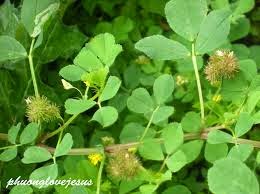
This is for my winter weary friends in the Northeast who by now, must be tired of white and could use a green “chlorophyll fix”.   This is NOT intended as bragging; my “grass” may be green now, for in Texas, it starts to green up by February, BUT give it 3-4 months and it will be brown as toast. Plus, it isn’t really grass.  Much of the yard is clover, which normally would be a good thing; it never grows too high, it fixes nitrogen in the soil etc.  The only hitch, and I think I have mentioned it before, is that it is BURR clover and eventually all the sweet little yellow flowers will turn to burrs that will be all over my dog, and consequently, all over the rug.  So this early shot of green comes at a price.


While you were all getting buried in snow, we were getting, what I think, was more rain than usual.  Ah, the wildflowers will be fantastic this year!  At least that is what I thought but just today, talking to someone about it, they said, “No, the rains need to come in the fall not spring.” Supposedly then, these rains were too late, so I better stop inviting everyone down to see the “river of color” the pastures can be.  It just shows that after 3 years, I still don’t know how to “read” Texas.  If I look at entries from our first spring here, I see the yard was awash with wild flowers in March. This March there are a few dandelions and a couple wind flowers; not exactly “awash”.


However, what we are awash in is mushrooms.  Not the wide variety and color array I would look forward to on the Cape, but still, my walk around the neighborhood with the dog had me stopping every few feet to look at what seemed to be a type of Earth star. Correct identification of mushrooms is tricky business and I have just spent the last 20 minutes scrolling through pictures of earthstars and false earthstars.
 None of them looked exactly like the kind I saw. I continued to look and now,  if I had to make my best guest I would say I was looking at, are you ready, Scleroderma polyrhizum.  Its common name is “Star Earthball” or “Dead Man’s Hand”. The latter paints a lovely picture doesn’t it?


 The written description comes pretty close: lover of poor soil (check), coming up through road edges (check), and splitting open to reveal black spores (also check).  It is supposedly found in many places including North America, and as broad as that is, I will also say, check.  They seem to love the roads gravelly edge, and they were doing that Super Mushroom trick of coming up right through the road. 


I feel I must add this “road” is not a well sealed professional road but our neighborhood facsimile of a road; tar gravel and vaguely flattened out.  I was pretty surprised when they put it in that the plan was for the intense heat of a Texas summer to melt it all together and our tires would act like the rollers to press it flat!  Great.  We all had gravel-studded tires, gravel-studded driveways and gravel-studded shoes for some time.  But it looks like this fungus loved it!


After so much rain, the bare spots in the back yard are covered with a black jelly fungus.  Its Latin name is too ridiculously long to spell. The cool thing about THIS fungus is that when it is dry, as it often is here, it is black and crusty.  However, when it rains, it returns to the rubbery texture that gives it it’s common name of “jelly fungus.” Cool.

This certainly has been like me, to start with green grass and end with black fungus!  I have always said my personality is akin to the White Rabbit in “Alice in Wonderland”, often rushing, often late.  My other tendency is to take you dear readers down “rabbit trails” as my mind pings from one topic to another! Best to stop now before another “trail” beckons.

Meanwhile, my March wish for you is that your snow may be melting and your grass greening before the month is over.  8 days to spring and counting!


Thursday, March 5, 2015

Life in the Subnivian Zone, reprinted from 2/11

Authors note:  I wrote this piece on life under the snow a few years ago when we were having a wild winter on the Cape.  Now in 2015 history seems to be repeating itself and then some.  I thought, then, maybe it would be appropriate to print this again and let you know about the party going on down there!  Pat 3/5/15 where, even in TX if feels like it is in the teens today! 


With all the groaning so many of us are doing about this endless winter, it seems a good idea to point out a few creatures that are doing the dance of joy. Bring on the snow! May it last until May! For some, life in the Subnivian zone is sublime!

.
And what is the Subnivian zone? It’s simply the area between the ground and the top of the snow-an area of “free-for-all” for the likes of voles, mice, and shrews. Just think of the protection they gain within the tunnels they dig there. The temperature stays fairly constant, as it might in an igloo. The wind doesn’t bother them but most of all, the Hawk and the Owl and all others who place them on the “Friday Night Special” menu, can’t see them.

I am sure I have shared with you before how, as the snow begins to melt here, you can clearly see the tunnels that wind back and forth over the fields. Today I came across one shaped like a large valentine. Obviously no one has equipped these critters with a GPS or a Surveying kit to plot the straight line. Theirs is a meandering path that takes them to where grass may still be found, or whatever food source they are after. Under the cover of snow, mice and their like can feel free to chew away on the bark of young trees. If you come upon a tree in spring that is mysteriously missing its bark at the bottom, you can be pretty sure that is what happened.

The tunnels do provide some security, more than just having to “run for your life” all the time, but the prey weren’t left without a few tricks of their own. Owls and fox, coyote and weasels all have excellent hearing and they can hear the party going on down there. Perhaps you have seen pictures of a fox or a coyote leaping in the air to pounce on the ground, with the hope of trapping the vole in the collapsed tunnel.


Bernd Heinrich in his book “Winter World” says that, owls, upon hearing the sound, dive-bomb down with their feet curled and can punch a hole in even the crustiest snow. Then, grabbing with their talons, they usually find the, not-so-safe-after-all, vole. But before you take pity on the poor vole, let me remind you that it can have up to 18 litters a year, with 5 young in a litter and those, are able to reproduce in a months time!Eh Gad! Be thankful the occasional fox or coyote can still rout them out.

Another pro-snow animal is the Ruffed Grouse.
Of course, its preference is for soft snow that has recently fallen and has some depth. To stay warm through the night, and stay out of the storm by day, they blast head first into the snow and disappear in a puff of flakes. They then tunnel a little way under and set up a nice, well-insulated igloo for themselves where they are warm and out of harms way The only trick here is that snow may melt and then ice over in cooling temperatures making it a lot harder to ”poof” your way out again. Also, one must assume they only try this with soft snow or they would be in line with many of our NFL players with some serious concussions.


Now, does any of that make you feel better? Not every living thing is groaning about the forecast. And when the snow in your area finally does begin to melt, you too can go look for “Where the Wild Things Were”. Possibly even finding out your yard wasn’t quite as tame as you may have thought it was.

Saturday, February 28, 2015

The Joy of Snow


I feel it’s a bold step to title this, “The Joy of Snow”, for I can imagine the hate mail that could follow from all of you Northern folks who are half crazed with cabin fever, or are frozen to the bone with a fear of never being warm again.  To all of you, I apologize for the following essay.  For that matter, you probably shouldn’t read any further unless raising your blood pressure might warm you up somehow.


You may have seen that even Texas has gotten snow in this wild winter, but sadly, I am in South Central Texas where the most we can hope for is freezing rain, which, in fact, if falling right now.  AND it is the reason I can write this for otherwise we would be outside.  My husband would be balancing precariously on a ladder, on the parts where it says you definitely shouldn’t balance, to reach the dead branches that need pruning on the Live Oak trees. I would be monitoring his progress with my finger poised to dial 911 should he fall.

 This pruning is an endless task in late winter for they manage to have A LOT of small dead branches.  If you wait until spring to prune, you risk getting the dreaded oak wilt, a fungus carried by insects, then spread through the roots of the tree killing all other live oaks in the vicinity. 


  This is Texas, land of superlatives, so of course it is the MOST DESTRUCTIVE tree disease in the US! Of course.  It is the reason no blogs have been forthcoming lately because all free time is spent pruning.


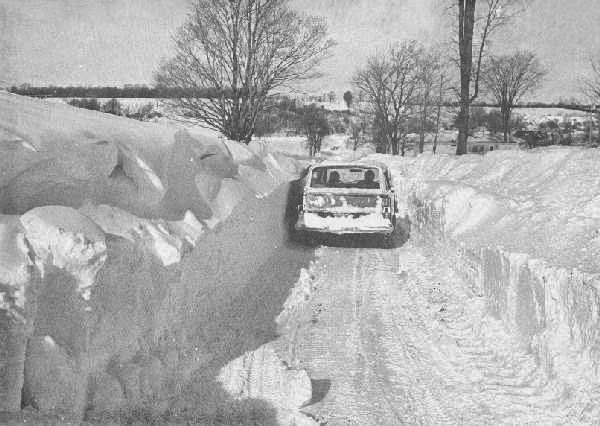
But I digress.  I have lived with very deep snow.  In Watertown NY, the average snowfall is 93” but approaches 200” in the snow belt south of there, which is where Ft Drum is. 


 When we lived there the snow covered the first story windows, you came in the house through a tunnel that made the whole place look very Hobbit-like and I loved it.  Granted, my only job was to take my daughter sledding right out the back yard each day and make sure we had our daily dose of hot chocolate.

 My second daughter was born there in Feb and I had nightmares about giving birth in a snowdrift, but that actually didn’t happen. It was often well below zero.  I know the tricky problem of not being able to exhale in a car because it instantly turns to ice on the inside of your windshield.  So I can empathize, yet even there, to the chagrin of all the Southerners ready to shoot their refrigerators, I LOVED it, and was sad when in MAY it finally stopped snowing!

All those winters on Cape Cod, I didn’t miss a day of walking my dog and I remember occasionally trudging through hip-deep snow to reach the railroad tracks that bordered the cranberry bog.  Once on the tracks, I was breathless, not only from the exertion getting there but also from the knock-your-socks off beauty that lay before me.  A field of diamonds!  I think you have all had that “diamond” snow this year.  The snow produced in such cold weather that each flake is rigid and reflecting light back to a dazzling degree.  Growing up as a fan of Paul Simon, I was always humming, “She’s Got Diamonds on the Soles of Her Shoes”, and I did.  Plus I felt just as “rich” as if they were the real thing.


Then, there is the joy of tracking; there is no better substrate to track in, well wet sand or mud is better I suppose, but for seeing the intricate pattern of a crows wingtips as he launched, or his skid marks as he landed, you need snow for that.   In snow, I would find out that my backyard was a veritable Interstate for coyote and fox travel. How easy to compare the long-fingered, jumping tracks of squirrels to the rounded tracks of rabbits, all laid out, clear as a bell before you. I miss that. 


Of course, the day after the blizzard there are virtually no signs, for the animals have “holed up” during the storm, but eventually, those who aren’t hibernating have to come out and look for food, so tracks will show up.

Remember though, one can be fooled by tracks in melting snow, for the imprint gets larger as it melts and you might convince yourself moose have moved in, when it really was a deer, or bears, where it started as a coyote track.  Some common sense is required. Not likely Bigfoot lives in your back yard!   

EVENTUALLY then, the snow will melt and another whole new world will be on display, the “Subnivian” world.  A world I have written about in a past blog, but is worth writing again; the revealing of the reveling that is going on under the snow that none of us sees now, but will when the snow melts.  Clues that will be left to remind you in summer how high the snow had been in winter. That can be the topic of the next blog.


I do have sympathy for all that you “blizzard bound” people have been going through.  I know it has cost a lot of lost work time, a lot of revenue for some, and a lot of injured backs or worse.  Please don’t think I have callous disregard for your troubles.  I don’t.  But the earth is spinning on its axis and gradually tipping us closer to the sun.  Friday, March 20th, the first day of spring, is less than 3 weeks away!  Hold on then, and have another cup of hot chocolate, it’s on me.


Thursday, February 12, 2015

Valentines Day for Skunks


Romance can be a dangerous thing, especially if you are a skunk!  Have you noticed how many poor, flattened, skunks there are on the road this time of year?  (Feb-April) That is because February, the month of love, is the beginning of the mating season for the striped skunk.


 Here in Texas, it is in full swing and you can’t help but notice the sad uptick in skunk highway fatalities.  If we were to take a survey, I would wager the dearly departed would be 100% male.  For such is the fate of many a male who swaggers out to find a mate.  Whereas his normal lifestyle would generally find him no more than a ½ mile or so from his home territory, when it is time to find a Valentine, he may travel up to 5 miles a night.  And in the course of those miles, he often has to cross many a road.  Sadly, his one means of defense, his spray, is no match for a car and so, our Romeos search often ends in tragedy.  Who remembers the hit song, (can you believe it was a hit!) “Dead Skunk in the Middle of the Road”? A musical tribute to the dangers of love for a skunk!


By nature, skunks are both shy and solitary.  In the winter, especially in colder climes, skunks will hole up in their cozy den for weeks at a time.  The females either enjoy each others company (sound familiar?) or just find warmth in numbers, for you may find 5 or 6 females in a burrow together with last year’s young.  Males, however, are solitary (also sounds familiar) and come out of their burrows before the females do in search of Mrs. Right.


To be honest, he may search out many Mrs. Rights, for skunks are polygamous and once the next generation has been secured, he is on his way to find the next Mrs. Right. The females seem to like it this way, for if the male were to try and come around after the kits were born she would aggressively chase him away. (No comment!)

 In defense of skunks, let’s note that they are, for the most part, slow moving animals, without the best sense of sight or smell or hearing for that matter.  Touch is their best sense.  And an animal like that, needs a decent defense if it is to survive. And do they ever!  Musk that not only smells bad, but can temporarily blind the attacker if it lands in its eyes, and because it is oil based, the scent will be on that animal (how well we dog owners know this) for a long time!  Their black and white coat, easily seen in the dark, is a warning, “Remember me? Don’t mess with me or you’ll be sorry!”


And their musk is precious to them; they would rather not waste it, so they do give a clear warning.  First they will stamp their feet, maybe even click their teeth, “Back off, I am warning you!”  You and I, most mature coyotes and fox will do just that.  It is the inexperienced young animal or not too bright dog that will keep approaching. 


 Next, the tail goes up, it may back up a step or two.  “Foolish enough to come closer?”  Then, it does a little handstand and with its back to you, but its eyes keeping you in sight, it sprays the oily musk with great accuracy up to 15 feet. 


  The result is usually in the favor of the skunk.  As the dog is yelping and clawing at its face, the skunk can waddle away, unharmed.  Too bad cars don’t have the same reaction.

 As a public safety announcement, please drive carefully in this season of skunk love.  Remember, the scent is as hard to get off your car as it is off your dog.  Although many of you may think skunks are a nuisance, for instance, when they decide to den under your porch, remember that they also do us a great service of insect control, and carrion removal etc.  When rabies hit the Cape a few years ago, and the skunks took a big hit, my yard that had been kept free of grubs, started to have the telltale yellow patches.  Oh no, my skunks must have died! 


 That went on for a couple of years, and then, just as I was about to move, what did I smell?  Yeah! A skunk! They’re back! Long live the lawn! 

So, this Valentines, have a heart and watch out for the love struck skunk in your area.  Your lawn will thank you.