Sunday, August 22, 2010

Burgeoning Numbers of Birds


It started around August 12th or so. The numbers of Tree Swallows sweeping over each body of water, from the slough, to the pond, to the newer containment pond have been increasing steadily over the month. Swallows, whose families probably were raised in tree holes found in the woods around the bog, have come together as one. And how they delight me. I always have to stop in my tracks and look up, amazed at the swirl of iridescent green and white going on over my head. I stop because I know in just a few weeks time, this show, at least on the bog, will be over.
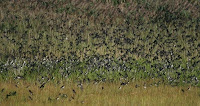
When they disappear from the bog though, there is a good chance I will find them with thousands more who will gather for their final staging on the dunes of Sandy Neck Beach, just a few miles from here. Going to see them there is one of the highlights of the fall. Of all the swallows, this is the one swallow who has extended it’s menu to include, not just insects, but the fruit of the bayberry bushes, small wax coated seeds that fuel them with the extra oomph they need to power themselves down the coast. They are often found on barrier beaches, dining as they make their way south. A much easier way to go, then say, some poor hummingbird that has to cross the Gulf of Mexico on nothing but the memory of the last nectar it sipped. Migration, of any species, should make us once again, be thankful for our, “drive as you go”, human status.

The other birds that are ever more present are the Robins. “Perp, perp perping”, greets me from the Tupelo trees on the eastern side of the bog as I round that bend. It seems when I go at about 7 am I am catching the early morning commute as they leave the roost of the night before and fan out in search of black cherries, tupelo seeds or of course, the worm that lurks beneath your grass.
But they too are doing spirited dives and chases that lets you know the tempo of the flock is rising as they get closer to saying “Adios” and head south. On the Cape, we have a treat of not being robin-less in winter though, for the Canadian Robin, a slightly more robust version of our Robin considers us “South of the Border” and they roost in spectacular numbers in a cedar forest near here. It is the awaited event of Dec and Jan, and when it does happen, surely you will hear about it.

More Sandpipers, Solitary and not so are “peep, peeping” at the edge of that containment pond. I know the sand flats at the ocean are sporting, or so I read, thousands of mixed migrant flocks of terns and sandpipers and all those returning from the north, now headed south, so my paltry little 5 or 6 are nothing. But they are my 5 or 6 and they are right out the back door, so they will have to do. I never seem to have the free time to get further down the Cape in the fall when it is so spectacular and the article is always pretty vague about where said “sand flats” are. I guess I should just know. Something to try to get my “ladies” to before fall is over.

The family of Red Tail hawks has to move over, literally, for the wave of migrant hawks that are also headed this way. I saw the large young Red Tail, actually move off its perch when a Sharp-Shinned Hawk landed on the same branch. Please, a little more dignity! A Sharp Shinned Hawk is a little smaller than a crow, and yes, it eats other birds, but not Red Tails! A Red Tail in need of a “self-esteem” seminar!


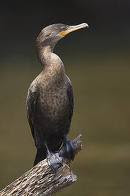
Round the later-summer crowd out with a pair of young Cormorants on the pond and the juvenile Great Blue Heron that entertained me last week with his arduous swallowing of a frog and you have the look of the bog, avian wise, at the end of August. I seem to hardly even notice the crows, which for awhile, after so many of these leave, will be the main entertainers.

Wherever you are, take notice of who is gathering and who is going and who, “Hey how did that happen”, is already gone. I always feel put out when the catbird that has serenaded me all summer leaves without so much as a “bye your leave.” Enjoy then, the end of heat is nigh, the bursts of color are about to begin, we see it already in the red branch here or there of Tupelo, and the little two legged dears will be back in school. A change of season is at hand once again and we are blessed to witness it aren’t we?

Friday, August 13, 2010

Of Damsels and Dragons


Oh Odonata, how I will miss you when you are gone. Jewels on the wing- damselflies, the delicate ones who hold their wings daintily over their back, and dragonflies, those B-1 bombers of the air, snapping up mosquitoes in their leg baskets with abandon. They have been the stars around the pond since late spring. Though many species have laid their eggs and ended their two-month stint as adults, other species are just now coming into their own. The sight of Ruby Meadowhawks on many of the trails I hike lets me know we are at the end of summer. Just as you can tell which month is which by the scent of flowers blooming, you can also track the progress of summer, to some degree, by which dragonfly is clattering by.

Swimming at the pond in July meant practically ducking to get out the way of male Calico Pennants, dive bombing each other whenever one strayed into the other’s territory. It also meant watching myriad’s of threads of bright blue fly among the pond side vegetation for the Bluets were having their coming out party. Now, I seldom see either of those, but last week at Hoxie Pond, the sought after treat was the sight of the almost-too-slender-to-see Violet Dancers.

If you manage to get a close look at them when they land you will see a slender, for these are damselflies, violet abdomen with bright blue at the tip. Those are the males. I actually got to see a mating pair, and what I thought had been a “ come hither dance”, turned out, now that I know a female, to have been two males sparring, not courting. The female, is a drab rusty color, but now I know. That is the way we learn, isn’t it? Watch and see and some things you thought were true may turn out to not be.

This week, and I always see this as a sign that we are turning towards Fall, the Ruby and I mean ruby- red Meadowhawk is out hawking along the trail. All dragonflies and damselflies start their life in the water, and will lay their eggs in the water, but some head to meadows and upland fields to live out their short adult lives and this is one of them. Look for them from now until October along sunny trails. I think with this species, the female is more of a yellow color. The one I saw today was hovering in the sunlight and it must have been newly emerged for it was as red as red gets. Beautiful!

One of the larger, maybe the largest dragonfly, that everyone recognizes is the Common Green Darner. They are common, as their name suggests, and they have a large green head and long blue abdomen. These are the ones that migrate south for the winter. Obviously, they manage to live more than the 2 months all the others do. They say this species can be seen massing together over fields by the 1,000’s. Wouldn’t that be something to see! I have only seen them by the 5 and 6’s but than maybe I just haven’t been at the right place at the right time. They are strong fliers who have been clocked at 40mph. I would easily believe a lot of them are capable of those speeds, especially when they are buzzing by my head as I float along in the water.


This entire jewel-like beauty of the adult phase is nowhere to be found in the nymph stage. Buggy eyes, long bodies, a mouth that flies out on a hinge to eat ever larger prey as they grow, the dragonfly nymph is the terror of the deep. The damselflies are also predators in their nymph stage but they swish their “tail” as they swim looking more like sashaying ladies than trained assassins. For that matter, my sympathy goes out to the male damselfly, for we tell the kids to remember which is which because the damselfly swims like she is saying “I’m a damsel in distress”, which probably isn’t the way a male damselfly would chose to be remembered!

Amazingly, both dragonflies and damselflies can take from 6 months to 6 years to go through their nymph stage before they come out and have their 2-month season as adults. That phase is all about, quick, find your true love, mate, and deposit the eggs one by one into the slit of an underwater plant and then, its curtains. Ah, the brevity of life.

But there are still a few months left to be entranced by them. Watch for the way they “power down” when they land. Just like a helicopter, a very mechanical lowering of the wings. Move slowly and you can get pretty close to them, close enough to see that dragonflies have HUGE eyes with, take my word on this, 30,000 facets to them. Damselflies, if YOU have good enough eyes to see, have smaller, more set-apart eyes. Watch for the also mechanical way they move their head as they get things in focus. And if you catch one eating, well, that’s pretty cool too. They have really strong jaws. For that matter, their Latin name of Odonata means, teeth, which they don’t have, but someone watching must have thought they must for the way they chomp down on things.


So, there’s your assignment, catch some of this Odonata show before it leaves town. Because once they are gone, it’s a long time before the air if full of clatter and jewel dancers again. At least, for those of us who live in the Northeast.

Tuesday, August 10, 2010

"Can you take Leviathan Home as a Pet?"...


“If you merely touched him, you’d never forget.” Wonderful lines from an old Michael Card song about Job from the Bible. God is reminding Job just who he is talking to, someone who can take Leviathan home as a pet. Every time I am on a Whale Watch trip and the whales come “poooshing” up with an exhalation, practically in your face, as you lean out over the bow, I think of the truth of that line. If you merely touched him, if you merely saw him this close, you would never forget. Consequently, I am an avid, more than avid some might say, dragger of people on whale watches whenever they come to visit us here on the Cape in summer.

And so, this past weekend we had just such an opportunity. My youngest daughter was home for the weekend with friends and one of them had never been on a whale watch, so, hot dog, a fresh victim, a fresh excuse to go! We are so fortunate to be one of the top 10 whaling spots on earth, so really, to miss this, is to miss the main event. Humpbacks, Finbacks, Minke, and Northern Right Whales all love to graze around Stellwagons Bank, just northwest off the tip of Provincetown so the trips are bound to produce something. I always favor the sunset trip, the last one of the day, for whatever you may see will be highlighted by a glowing orange sky. On one amazing trip when my children were young we saw a humpback breach more than a dozen times with the setting sun directly behind him.

But wow, Saturday when we went, it was completely whale soup! Humpbacks are always the main draw, for they are the most athletic of all the whales. Over past trips we have seen innumerable breeches, when they leap all 40 tons out of the water and crash back down with a huge spray, tail lobbing, flipper flapping, and fluke throwing. But the last few years have been superdy-duper spectacular with many more feeding displays than I remember seeing in earlier years. Maybe the sand lances that they love have increased in number, but whatever the reason it is beyond spectacular.


This past weekend we came upon several pairs of whales churning the water pale green with their “bubble nets”, then watched them coming up like synchronized swimmers right in the middle of it with mouths wide open. They were so close you could clearly see their baleen, hanging in sheets and even the pink upper palette of their mouth. Then they would cruise along at the surface, mouths still slightly open with their lower jaw with its rorqual pleats ballooned out as they filtered the water out and kept the fish in. Incredible, and more so, because it was happening within feet of the boat. One such pass brought them right under our bow, with a loud “booch” of exhalation that spread misty whale breath over we eager folks who spend the time out as far on the bow as is allowed.


And you know that is the secret to an exciting whale ride. As soon as you get on board, head up front, stake your claim on this narrow part of the boat and ride out that hour of high-speed, up-and-down with the waves, that gets you to Stellwagon. Its worth it just for the wild ride that is, and puts you in perfect position to be among the first to spot the whales, and the most likely to get whale breath on your face. And who would want to miss that!

Ok, back to the whales. So at the risk of anthropomorphizing, you sure would have guessed we had shown up at suppertime. Apparently there were schools of lances, small fish that they love, and everyone was joining in on the feast, so not only were there several pairs of humpbacks but, also, feeding along with them were Finback whales, second only to the Blue whales in size. They are long and slender and seldom show much more than a dorsal fin, but these were lifting their long narrow heads out of the water and showing much more than I am used to seeing of a Finback. Zipping around all of these were Minke whales. Small for baleen whales but 30 tons of zippiness all the same.


As if that wasn’t enough, several pods of Atlantic White Sided dolphins showed up, crisscrossing crazily among the larger baleen whales, putting this on the map as one of the best whale watches ever! Toothed whales are the high-speed whales who love to ride the boats bow, or leap, Sea World like, three abreast. It was just incredible! Now, add the birds, pelagic birds you only see out to sea, like Greater Shearwaters and Wilson’s Storm Petrel. The Shearwaters swooped in, practically swooping into the whale’s open jaws to go after the same obviously irresistible sand lances. Wow, wow, wow! What a gift it all was-to my daughter, to me, to her friends, to everyone on the boat.


Interestingly, when it was finally over, our guide warned us against ever expecting anything like that again. “You should expect a nice boat ride and a sighting of a whale or two and be happy with that”. Well, respectfully, I beg to differ. Take the sunset trip, spend the whole time out on the bow, look for glory in the sea, the sky, the wind, and I think each time, you too would leave singing, “Can you take Leviathan home as a pet, if you merely touched him you’d never forget.” Or whatever song reflects pure gladness in your heart.

Monday, August 2, 2010

Taking the Long View

Four, or maybe it was five years ago, I headed out to walk around the bog and as I got closer,I heard the loudest crashing sounds and I couldn’t imagine what they were. When I crested the tracks I saw, to my horror, that the woods to the east of the bog were being systematically eradicated. I was so shocked, so sad to see that all these trees that had been in a small valley that a stream cut through, were just about gone. It turned out that the grower was making a new containment pond out of the stream and all vegetation had to go. I know it is his land, but at the time I was crushed.

Now, this morning, some five, or maybe four (time has a way of being elusive doesn’t it?) years later, I walk around the containment bog and is this a ruined habitat? No, it is a completely changed, but still,a life-filled habitat. This morning, which happened to be an exceptionally good morning, there were two young looking, Green Herons perched, pretty obviously, in the branches of the dead tree that stands in the middle of the pond. A few other dead limbs are around it, favorite-watching spots for Phoebe and her gang, and the Kingbirds when they are in the mood to share. Today, it seemed to be Phoebe’s turn. Accompanied by her charges, flitting out on their own for bugs now.


A Solitary Sandpiper has been here for the last week, and today, I see three. As Solitary Sandpipers are usually just that, solitary, I have to happily assume that these may be her summer brood, just learning the ropes of plunging that bill in after, who knows what, worms and hidden yummy things under the mud. A Bullfrog chug-a-rumed from the banks, Swallows swooped in after the bugs, missing a few as I was getting pretty chewed up by mosquitoes as I watched, and well, not today, but other days, I have seen the poked up nose of a turtle. Dragonflies clatter by, slender threads of Damselflies alight on the veg at the edge and none of them would be here if the woods hadn’t become water. So, I am simply being reminded that,at times, I need to take the long view.


What are we at,Day 104, as they like to tell us, of the Gulf Coast disaster? Sometimes I think, what if someone had been keeping count after the K-T asteroid struck? The one that formed the 100-mile-wide Chicxulub crater beneath the sea near the Yucatan which pretty effectively removed dinosaurs from the hit parade. How many 1,000’s of days would that have gone on, and yet, here we are, the new Big kids on the block and probably somewhat thankful that T-Rex isn’t living up the street. The long view. What we see now, isn’t what will always be, and sometimes the change works out for someone’s good. Perhaps an altogether different someone, but life has a way of going on doesn’t it?

For today, I am going to try to go with the flow. Life changes, kids grow and become adults, woods can change to water and in both cases, life is a flourishing thing. Remind me that I said this, when you hear me wishing aloud for a magic wand that could make everything revert to a former time. After all, if that were the case, T-Rex could come knocking at my door!

Thursday, July 29, 2010

Thanking a Glacier

My head was boiling hot. Actually, my whole body was boiling hot. I had just cut the grass on another sultry day where the normal mammalian trait of sweating to cool the body down just wasn’t doing the trick. So the only thing TO do, was to grab my dog and head, no more than a mile from my house, to Hoxie pond. My idea of heaven is to plunge in head first when you are soooo hot and instantly be cooled. Probably your idea of heaven too. Hoxie has always felt like my own personal pool, one that conveniently needs no chlorine or daily bacteria testing. And one I magnanimously share with others. Tuck and I use the “dog” beach, which is especially lovely, for it is on the far side of the pond and never crowded. One or two other chatty dog owners, one or two other frolicking pups.

And for this grand gift of nature, I have a glacier to thank. The Laurentide glacier that came to a halt here some 20,000 years ago created the bulk of the Cape we see today. Happily for me, this glacier left several large chunks of ice that didn’t melt at first, but left deep depressions. Where those depressions intersect with the water table, you get a kettle pond, which is what Hoxie pond is. The Cape is riddled with them. It practically looks like Swiss cheese when you fly over it, and so, for many of us, the hot days are made cooler, not just by a trip to the beach, but you can finish that up with a dip in a pond and get salt and sand off.


Plus there is no grander way to bird watch, than to float on your back and watch swallows come dive bombing in after insects and watch the Osprey eye you as perhaps some weird, fresh water flounder. It amazed me, that in a space of perhaps 10 minutes, I saw more action in bird land than I had on my entire nature walk I had taken some people on earlier. Tree Swallows, the Osprey, than two Redtails being dive bombed, just like the ones at the bog I walk around, by two Kingbirds. How often I wish someone would get on that “teleporting people” invention so I could instantly bring others to see what I am seeing at the same time.

If I wanted to, not only could I cool off in the pond, but, at this particular time of year, I could wash up too. Just like taking a bath at home only here, the soap is growing on a tree. Remember, when we talked about how you could practically tell the time of the month in summer by just using your nose? Well, end of July, early August means we are in the blooming season of the Sweet Pepperbush, and what is so cool about this plant is that you can lather up, just by using its blossoms with a little water. Conveniently it grows right along the waters edge, and, on the Cape at least, is a very common shrub. It reproduces by runners so you don’t even have to feel riddled with guilt for taking its blossoms. Its flowers are on a spike and if you look carefully, you will see that it blooms from the bottom of the spike first, then moving up to the top. You can tell when the season is almost done because only a few blossoms remain on the top of the wand. The ones that are finished blooming are on their way to becoming seeds that look like peppercorns and are the reason it is called Sweet Pepperbush. Sweet because it smells so sweet.


If you find some, just strip the blooms into your hand, one or two wands are usually enough, add some water and then rub vigorously. A lovely lather forms and in no time you are squeaky clean. It’s a cool thing to show your kids or grandkids how to do. Around here, I would say you have another week or so to ferret them out and give this a try. Do be careful to look for bees when you pick them for they love it too and rubbing a bee vigorously is never a good idea.

So, thank you glacier for providing the tub, thank you nature for providing the soap and thank you God, for providing the setting to begin with, and a moment in the day to enjoy it all.

Wednesday, July 21, 2010

The Bog- A Month Later

Finding normalcy, after any trip, takes awhile for me. That sense of waking up wondering “Where am I?” and, “What is it I am supposed to be doing?” seems to dog my first few days back from any trip, any where. But a centering thing is always returning to the early walk around the bog with the dog. Ah yes, here, here I am and what has happened in my absence?

For one thing, all the little fledglings that I fretted about; were they being gobbled by crows, soaked by rain, or just popping out of the nest too soon, seem to have managed just fine without my daily check ups. Not that I actually found that many of the nests. Only the Kingbird and Phoebe nests were known to me, the more secretive crows clearly were raising their various broods a few trees back from the forest edge and never seen.

But now, on that first day back, what a treat, for there were two youngish looking Kingbirds, diving on a youngish looking Red Tail Hawk, chips off the old Tyrannous block for sure. Mom and Dad would be proud. The hawk parents maybe less so. Young Redtails, and I am so glad to see my pair raised two, have mottled brown tails rather than the reddish color they will have by next year, so they are easy to spot. Plus they were, and there were actually two Redtails being chased, so quick to give up their roosting spot that they seemed new at this “chased by something one tenth your size” concept.

Every sprinkler head around the bog seemed to have a new Phoebe on it, so I take it their “repopulate the world with flycatchers” efforts also went well. And coming up to the slough, which has been empty except for the occasional Yellowlegs or Spotted Sandpiper had, and this seemed practically like a mirage, 6 Great Blue Herons in it! That folks, was a first for me. I have never seen so many together, I have never been aware of seeing a family together, but this is what this seemed to be, perhaps two pairs with their mostly grown, yet always, gawky looking young. Incredibly my dog didn’t even notice them, but they eventually noticed me and lifted off with pterodactyl like calls. The wildest thing is that a friend reported seeing 6 herons on her walk down by the salt-water marsh, and if I were a wagering type, I would bet they were the same ones. Very cool.

The other most obvious change, besides the profusion of young birds, is the encouraging collection of bullfrogs, bright green and ringing the pond. Some tadpoles are still in a sort of “frogpole” condition, more body than tail, and my dog is beside himself with delight at snuffling them out and then being dumbstruck each time by their disappearance under the water. Often I don’t see them, only to look down and then notice two huge bullfrogs right at my feet. Surprises me every time. It’s a healthy world that still has a peck of amphibians, and all with the right amount of legs and eyes. A needed antidote to the nightly news.

So, I guess I know which zip code I am in again. And although there is much work to be done, the heat is making that less appealing. Tonight I meet with my walking ladies and we shall head down to watch the terns complete their ever so long ministrations to their begging young. Next time we write, lets compare notes on the “begging sounds” coming from your trees and bushes. Hard to give up a free meal shoved down your throat. Perhaps the ones leading seminars on “Tough love” should be Cardinal, or Crow, or pick any bird species, parents! Until then, may you know which zip code you are in, and be out enjoying yourself when time and temperature allows.

Monday, July 19, 2010

Cape Cod to Croatia and Back Again


If I haven’t blogged in a while, and I haven’t, it is because I was lucky enough to go with my husband to Germany. There we joined our daughter who is stationed there, for one last Gonser style, “drive till you drop” fling, before she would be deployed for a year. However, only half the days were “drive till you drop”, as in covering a lot of distance. The other half had potential to be “drive till you literally drop”, as in, off the edge of a cliff into the sea. My husband’s view is, why pay an exorbitant amount of Kuna’s (Croatian money) to take the straight-as-a die, get-you-there-alive, highway, when you can careen back and forth, along the entire coast on a sliver of road that hangs by a thread onto the mountain side. Of course, you would take the latter. Which admittedly provided us with THE most spectacular views. For that matter, I was often asking my daughter to take the picture because the ocean was, after all, right out the front window, not the side. Which was somewhat disconcerting. But we survived, and the views of the aquamarine Adriatic and the medieval cities of Rovinj and Dubrovnik, the many Roman ruins, and incredible waterfalls of Plitvice National Park will be ingrained on our retinas for some time to come. We are a family that does more “ingraining on retinas” rather than taking actual pictures, so you needn’t fear this becoming a 200-picture slide show retell of our trip.

As the focus here is generally on the natural, allow me to share just one of many of the natural highlights of the trip. Personally, I am not very good at keeping historical facts straight, or architectural styles correctly sorted by century, and sometimes, it is just easier in these wonderful cities, to just look up. It seems, no matter what European City you are in: Vienna, Budapest, Munich, Rome, or, in our case, all of Croatia, in the evening if you look up, you will see that the air above you is alive with the wild kamikaze flight pattern of European Swifts (Apus apus). They look rather like swallows, but they are in a separate family and their wings are shaped more like boomerangs. Here in the US we have Chimney Swifts that you might be familiar with.


You would look up too, just to see what was making such a racket up there, for they come swooping in, at these crazy high speeds and they seem to always be screeching. “Screaming” is actually the term bird books use for their vocalizations, and the females “scream” is supposedly higher pitched than the males. That provided hours of amusement for me, for as my husband and daughter decoded the cities fortified walls, I was seeing if I could pick out high screams from low screams. I don’t think I ever got it. The books say the birds indulge in “screaming parties” in the evening, which is definitely what we were witnessing. As the final matches of the World Cup were playing on Jumbo-trons in every city, there were plenty of “screaming parties” going on at our level too.


Its amazing how constant their activity was. The birds that is, they were often chasing each other, sometimes, swooping in clusters, sometimes fluttering near a window ledge to presumably feed the young swifts whose nests were hanging, under ledges and gutters all over the main squares. And their wild revved up flight is just the way they do business. They fly continually for they eat on the wing, catching bugs in their wide mouths (No wonder no DEET was necessary on this trip). They sleep on the wing, something no book every completely described satisfactorily. How do they keep from crashing into the omnipresent Roman ruins if they are asleep behind the proverbial wheel? I am going to guess that like many animals their sleep isn’t a deep one like ours. Some ducks shut down half their brain at a time, one eye open-one eye shut, half-awake, half-alert. Perhaps they do the same. They collect nesting material on the wing and sometimes-even mate on the wing. The young that were in their nests are likely not to touch down again for the next three years when they will be old enough to incubate eggs themselves. For that, they are willing to do sitting down.

As far as birds go, Swifts are fairly long lived, 9-10 years, and they always return to the same nesting spot, so you can imagine these Dubrovnik birds may have been coming here for the 1400 years that the walled city has been there. Speak about being true to your school! There is a nesting group in Oxford that has been continuously studied since 1948! The longest ongoing study of any bird anywhere, which is what happens if you hang out in major intellectual centers, you will be noticed, tagged and dutifully recorded.

Their scientific name (Apus apus) comes from the Greek meaning, “without feet” for with a life always in flight, feet seem a little superfluous. Theirs are short and stubby, which explains why they always looked like they were wildly scrabbling to hang on to the ledge as they fed the young. Probably much the same as our car looked as it scrabbled along the edges trying to hang onto the road.

One, I promised to keep the number to one of my natural history highlights of the trip and so I shall. Back to blogging about bogs in future days. Weeks have gone by, and much has changed in the dynamics around the bog. That is what we will return to another day. I do think though, that if Swifts should swoop into an evening view, I would be instantly transported to a warm night in an ancient walled city in Croatia, or almost anywhere else in Europe. And that is a lovely thought.