Friday, June 24, 2011

The Blogs that are Clogging my Brain

Consider this “Previews of Coming Attractions”. I know I have explained my situation before; programs everyday, a house to prepare to rent in Buffalo, 500 miles from here, and my own house, now on the market, with realtors coming through tomorrow. Yet my daily walks with my dog continue and daily there is glory to be seen but how frustrating to have no time to get it down in print. So this will be a preview of what I hope to write about if the dust ever settles in my life. IF it settles.

“Learning to sing”- I imagine your yard is as full of nesting birds as mine, perhaps where you live the birds are already into a second brood. I still have trouble sleeping, but the delight of that is that I know exactly who the first birds to tune up are. In my yard, that would be the Song Sparrow.
And here is what you can listen for; songbirds, like the Song Sparrow, learn to sing through imitation of their elders and it takes place in the first few months of their lives. Lately, I have been entertained at 4:30 am by what I believe are the early attempts of a young Song Sparrow to get the hang of its theme song. It is still incomplete by a few notes, picture Beethoven’s Fifth with only “ta da da” rather than “ta da da dah”. The complete refrain will come in time, but it lets me know that right now, out my window is a young sparrow newly fledged.

If you have any White Throated Sparrows in your neighborhood, listen for their voice lessons.

As adults their song will sound like “Old Sam Peabody, Peabody, Peabody” or at least that is the way New Englanders hear it, Peabody was a formidable family in the area throughout our early years. But my young one says “Old Sam Pea” then repeats, “Old Sam Peabod”, then tries again. Ah, such perseverance, and again the complete tune will come in time.

Another topic we will attempt to deal with is finding pictures of the zooid form of sea stars, crabs etc. I had a lot of tide pool programs to do this spring and I always wish I had some way to show the children the “baby pictures”, as it were, of the animals they are finding. As much as a caterpillar looks nothing like a butterfly, neither does a zooid crab look anything like the crab it will become.
So, sometime this summer let’s try to write about that, a “Who’s Who” in the zooplankton world.

And, don’t let me forget to write a word or two about the Marvels of Mummichogs: one of the hardiest fish anywhere, the first fish to blast into space, the one that I am about to go do a program on today.

How does that song about Winnie the Pooh and Christopher Robin go?

“Help me if you can I’ve got to get
Back to the House At Pooh Corner by one
You’d be surprised there’s so much to be done
Count all the bees in the hive
Chase all the clouds from the sky”

It feels representative of life these days-so much to be done. But I wish you all well, and my hopes are for slightly more time in July for us to share our sightings and musings together. Of course, at some point we need to go to Texas to look for our house, for, what if the shocking possibility that someone may buy our house, comes to pass? Maybe I would really get a chance to study “in the field” for I would be living in one!

Until then, enjoy the teaming life around you, summer is here, officially and nature is on full display. Now, excuse me while I go “chase a few clouds from the sky”.

Tuesday, May 24, 2011

By Way of Explanation

Just consider me the missing blogger. Between the recent trips, a busier spring work schedule, computer trouble, preparing a house for rent in Buffalo and anticipating a move to Texas, I just haven’t had time to comment on the arrival of birds, or flowers or all things spring like here on the Cape. And I miss doing that. But time is what it is, a limited commodity, so I apologize for not getting to this.

My original goal had been to share the sights and sounds of my walk around the bog through a Cape Cod year, and I guess I did achieve that. I often think if anyone wonders what’s happening in May on the Cape, well its fairly similar to last May on the Cape so one can access those entries. What I should start to chronicle is how one resets ones mind from nature in New England to the natural world of the southwest deserts. I have bought all the books, Birds of Texas, Reptiles of the Southwest etc, but haven’t gotten around to really studying them. Mainly because denial is the state I seem to most enjoy. The housing market being what it is, with luck I will get to stay on the Cape a little longer even if my husband does need to start his job by mid-August.

A quick run down on what my walks have featured each day for the last few weeks is watching the leaves unfold under a rather constant cold and gray sky. We have been unseasonably chilly, and “misty, moisty” has been a pretty constant condition here. I keep placing seeds in the ground that are either just rotting away or considered home delivery to the insects that might be eating them. I feel for the nesting birds that have had to keep eggs and chicks warm through chilly damp days and search for insects that would rather hunker low than fly about. Bee’s aren’t exactly buzzing about in hordes due to the cold and yet, and yet, leaves unfurl into their many varied shades of green, moss sends up its spore capsules, and the forest floor is littered with Starflowers and Canada mayflower.

In my neck of the woods it is pretty much still stealth mode for crows and blue jays. No garrulous cawing or jay chatter, just silent trips and sideways glances as they head to their nests. Chickadee’s are flitting in and out of their respective nest holes and only come to the feeders at dusk for a recharge of their own batteries. I always wonder if they switch their diet to insects more once they are gathering them for the nestlings. “One for me, one for my chick”, etc.

The bog also has seen the return of every type of Flycatcher from the early Phoebes to the Great Crested and the pugnacious Kingbirds. If you want to know where anyone’s nest is, just watch the birds come out and go on the attack of any crow or hawk that happens to fly by. The days of the “duck du jour” on the bog have ended and no, that mallard never did return to the nest that was right beside the trail but probably found a more suitable place and although I watched the eggs thinking this is an easy meal for someone, no one seemed to have them on their meal plan, so they remain to this day.

I had the good fortune to see my resident box turtle sauntering down my trail, large as life, and another winter weathered. I was on my way to work so didn’t get to stop and watch how it would negotiate all the fallen trees along the path but detours are probably part of its daily life. I think they might amaze us all with what they can get up and over. So the regulars are back in place, spring or the feeling of spring may end up being a day or two event before summer is upon us, but as my future life will involve tons of unrelenting heat I am not complaining about cool temperatures.

Again, know that I miss these “walks” that we share, but will get to them when I can, and at some point will have to reinvent this as “New England Naturalist goes West” and we can learn together about the resilience of life in a drought stricken state But not just yet. No, not just yet.

P.S. In my usual technologically backward way, I can't seem to get my pictures to save or come up with this new laptop I am using, bear with me, I will eventually when there is more time, get the hang of it! Pat

Wednesday, May 11, 2011

The Blustery Month of May


I remember a song from “Camelot” that rhapsodized on the “lusty” month of May, but here on the Cape, at least for the last week, it has been the “blustery” month of May. A storm is spinning off the coast and seems content to sit there, so we have been treated to temperatures in the 40’s and 50’s accompanied with sheets of mist, rain and more mist. Walking the bog it looked more like a winter snowstorm than a spring shower and I, wrapped in winter scarves and gloves, could have been contemplating Christmas shopping instead of wondering how to get a frog in such weather.

More challenging than frogs however, was the need to find fiddler crabs for a salt marsh program. My co-worker and friend Andrea is a magnet for all things wild, so following her lead, we went out to the marsh at low tide. The wind was blowing like a gale and I thought “fat chance” of finding any. You wouldn’t catch me at the entrance of my burrow in such weather, not when I could go deeper in the peat and get out of the storm. Incredibly though, searching along the ditch edge on hands and knees, we actually came up with the dozen “volunteers” we needed. Think if it as crab community service. They all get returned to their home ditch as soon as the class is over. But they are part of a lesson on the energy cycle of the marsh, and they are so, so fetching that you hate not be able to show them to the students.

There are some 97 different species of Fiddler crabs but the one we find in our marsh is an East Coast fiddler, Uca Pugnax, a small rectangular crab no more than 1.5-2” long but grand to behold all the same.
The male is said to have “extreme chiliped asymmetry” which, in simpler terms, means he has one claw that is a lot larger than the other and it is this large claw that gives it its name.

Now, the “extreme chiliped” is all for the purpose of attracting the ladies, and for defending its territory. I knew the male waved the claw around to impress the women, but what I didn’t know was that by doing so it makes a sound that is music to the lady fiddler’s ears. If she is impressed with this display she will follow him down into his tunnel, and well, you can guess the rest.
I also read that he can stamp the sediment with his walking legs, all 8 of them and also attract the ladies attention that way. Either way, it is all for show, for the fiddler can neither eat with that claw, nor dig out his extensive tunnel with it. And for even more irony, the larger the claw, well the more ladies maybe, but the harder it is to get through his own tunnel or to forage for food. You can see where Nature puts her priorities!

Plus, I love this, I also read that the female will sometimes attach her tunnel to his, but because of the size of that large claw it is a one-way street. She can enter his tunnel if she wishes but he could not pursue her into hers. The liberated crustacean world!

As far as male fighting, they do wave claws at each other and do a bit of arm wrestling but not a “to the death” sort of duel. A male can lose his claw that way, but he can also chose to snap it off, if say a gull or some other predator is about to lift off with him. Better to lose your one “lucky claw” and live another day, than go down someone’s gullet altogether. Plus, with the next molt, the opposite claw will become the larger one. So when I find a fiddler if it has a left claw rather than right, I assume it has either been vanquished in battle at some point or has had a near death experience with some predator.

The females have two small claws- all the better to feed yourself quickly with.
The Fiddlers diet is detritus, making them detritivores, a fun word to say on any occasion. Detritus being small decaying organisms found in the marsh mud. They eat the mud but are able to filter the good from the bad, in a way, like earthworms do. And like earthworms, whose digging aerates the soil, the tunnels of fiddlers that can be a foot or so deep, help aerate the peat. The tunnels provide them protection from predators and when the tide is high they plug the entrance with mud and wait out the return of low tide, which is their preferred feeding time.

Not to be missed either are their stalked eyes.
They can be held straight up, or lay down flat along their shell for those tight squeezes in the tunnel. Very cute to see them “boing” up or flatten down. All together, this is one amusing crab. Worthy of the wild weather we had to face to get them. Hmm, but not having done the class myself, I am not sure if any of this magic was lost on the kids in the classroom. But when they come out for their field lesson, we will have a chance to convince them once again how grand these crabs are and see how proficient they can be at catching them. But that lesson is a good three weeks away, lets hope by then the winds will have died down and the temperatures risen to a more seasonable degree. Being New England though, that isn’t a given.

Monday, May 2, 2011

Becoming a Spring Tradition

I am quite sure I wrote about this same topic last year, at this same time, which I suppose qualifies it as its own kind of spring tradition- The Quest for Copepods.
Those microscopic crustaceans that are a “must have” for a pond program we do using a Micro projector and invariably take hours to find. This even though they are said to be coating the world in multiple billions. In fresh water, salt water, frozen water, for crying out loud. Just never in our particular pond. Well that’s not true. They are there, clogging the waterways when you don’t need them, but try and produce a half dozen for a class and I can guarantee they will be MIA.

If you were reading this last year, I do believe I filled you in on the life and times of the Cyclops variety of copepod. The one I am after, a hunter itself, looks for things even smaller to ingest. And what I really hope to find is a female with her “saddle bags” of eggs attached right above her abdomen like two grape clusters.

Now there are some 400 kinds of Cyclops species but I will settle for any one of them. The name refers to the one eye they seem to have right in the middle of their “head”, cephlathorax actually. Their jerky movement when swimming is what gives them away. Of course then; actually catching one in my pipette remains a challenge. However, hours later, a wee little group of them was finally found and I will just hold my breath that none of them “do themselves a harm” overnight in their container.

As I probably said last year too, the Daphnia are really the darlings of the show, what with their transparent bodies and a brood patch that 9 times out of 10 is full and looking as though birth were imminent-which it often is.
Life on the bottom of the food chain means you have better be a stellar reproducer, if you intend to stand the test of time-and they are. One source claims every 10 days, a new brood can be brought forth from spring through to the fall while another claimed it could happen in as few as three days. Let’s be conservative and believe 10. With each brood being between 8 –24 individuals, that creates a lot of daphnia to the delight of all those fish fry and damselfly nymphs that eat them. Also to scientific researchers who like to see the effect something has on an organism’s offspring. No need to wait forever with daphnia. I read they do research on the effect of alcohol and caffeine, which sounds too much like a Far Side cartoon to be fact, but if you believe everything you read in Wickipedia, then perhaps they do.

No doubt I told you they reproduce by parthenogenesis, but in the spirit of tradition let’s tell you again! It means they leave the dating picture out of things, their offspring are true clones of mom. And are all female themselves, leading to more cloned females when they reproduce. Again, if you are being gobbled up at a dizzying rate by other pond dwellers there is no time to find that special someone, so nature allows for this method. However, as fall comes on, and the need for eggs that may over winter occurs, the female will amazingly give birth to some males,
(how does that happen?!) and then the mated offspring will have a thicker shell that can last through the winter and as another benefit, it will get a shot at some different chromosomes; always a good thing for variety sake.

Today plenty of daphnia were on hand. Tomorrow I will cross my fingers for a birth in the class. Under the microscope, which is somehow always unforgettable. One minute a brooding mom, next a screen swimming with little mom look-a-likes. By the way, the Cyclops larva looks nothing like the adult but most molt a few times to get that classic Cyclops look. Looks more like a splatted crab than a copepod.


Well perhaps you have heard this all before. But I realize now, it has become a spring tradition so why not include it? The path I walk through the woods is every day more carpeted by Canada Mayflower, also a tradition. The swans are chasing the geese off the pond at work with great flapping and honking and swan like hysteria, another tradition. The Oriole has returned to its trees, right on time, as the early cherries begin to bloom and Catbirds are mimicking and mumbling in my front bush again. May your spring traditions be taking place like clockwork wherever you are. Noted and appreciated, from hunting copepods to hanging out the hummingbird feeder the season is fully upon us. Now let us enjoy!

Tuesday, April 26, 2011

Make Way for Ducklings, Possibly


Mallards, as we all know, are pretty common birds, found throughout the Northern Hemisphere, they are the duck that springs to mind when most people think of a duck. Yet it was an uncommon sight that greeted me the other day when I crested the hill behind my house heading for the bog. There was my dog, running full tilt up the trail with a female mallard flying low and just inches in front of him. Hollering for him to stop didn’t do any good, and I kept just willing her to gain altitude when it dawned on me, she is doing this on purpose. Leading him on a merry chase far from, goodness, what must be her nest nearby. Now the surprise in this is that it must be at least a quarter mile to the water, maybe more and in my mind it seemed odd she should choose to nest this far in the woods. But perhaps that is not so surprising, at least not out of the question.

Thankfully the dog came back empty handed, and I saw her circle us from above. Now, to look for the nest.
And there it was, no more than 5 feet off the main trail, behind a pitch pine, and thankfully somewhat guarded by Catbriar, but still, too close to this oft used trail for comfort. I would question the advice she got from her realtor on this issue, “seldom used country lane” perhaps she was told. But used enough, and by dogs. Of course I jest, the female and the male scout the nearby territory to find something suitable, and it is all on her shoulders to choose. Perhaps at the right time of day this seemed a lovely spot. Well, the next morning when I walked by, the eggs were gone. And I thought whoa, preyed upon already? But there were no broken shells, no sign of disturbance. Hmm, had she moved them, I think I have heard they can do this, but how I don’t know, rolling them along? Carrying them in their beak? I don’t know. Then to keep this mystery going, today, they were back! No action-cam set up to catch this. Were they new eggs, or did she move them back? I really can’t say with any certainty, just that this will be fascinating to watch.

Mallards do take a few days to lay their clutch then the female would begin incubating them for much of the day. The pond that I saw them sporting about on is, as I said, probably a quarter mile or so from here, and when you see a pair on a spot for a few weeks and defending it, you assume that is their territory and that the nest must be nearby. But although it is their territory, it is not where the nest will be. And for this season, she just has strayed perhaps a little further than usual. This morning I saw her circling nearby, but being chased by a crow. Who also is defending the right to keep his family’s nest a secret. The woods are full of such intrigue at this time of year. So, as I said, we will see if this is a nest that in the end works for her, or if she will have to start again in spot less traversed by one and all.

The nest is beautiful, a good foot across and rimmed with her plucked downy feathers. When she leaves the nest she will cover the eggs with the down to keep them warm, which wasn’t what happened the other day, they weren’t just covered, they simply weren’t there. It would be something if she made it all the way to ducklings at this spot. I saw a young coyote not terribly far from here the other day, so it would seem an easy place for predators to find too, but I wish her well.
And it will make that first morning walk full of intrigue for me, and also a call for a leash for my dog.

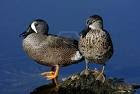
Just another side duck note, for the last 4 days or so I have seen a Blue Winged Teal pair hanging about on the slough and pond and would that not be lovely if they decided to nest here too.
Perhaps they are just passing through and enjoying finding things pretty much to themselves for the moment. Unlikely I would spot their nest for it is usually hidden at the waters edge, a hollow lined with down also, but if they continue to stick around one could hope. Far more rare than our Mallard, at least in my area but able to find happiness in the smallest of water areas. They don’t dive under for food but just skim off the top and they don’t need a huge space to get running along the water to gain altitude but lift up almost immediately. So again, we shall see. Its why walking the same area each day has its own intrigue, its own plot line to follow. I will keep you posted.

Although let me say here, with my return home from TN and a return to a busier time at work, and a move that hovers overhead like a gray cloud, I have not found as much time for to write this as I would like. Spring Azures are out
and I didn’t mention them, and the Queen Bumblebees are flying low over the leaves looking for a suitable nest sight to start their broods. Life is finally waking up here in the Northeast and it would be nice to have time to talk about it. But we shall do what we can, when we can. For anyone south of this latitude, you are well ahead of us anyway and this is all old news! May you be enjoying whatever mysteries present themselves at your door as I shall enjoy mine.

Wednesday, April 20, 2011

Rewinding Spring

I am back from Tennessee, one cute little grandson added to the family tree, and just like last year, it comes as a bit of a shock to go from the full tilt spring into summer that one finds in TN in April to the, “I am possibly thinking of budding” spring you find on Cape Cod in April.

In TN everything was in bloom, the dogwoods which are everywhere there, went from bare branches to flowers,
the maples shot out helicopter seeds to cover the back yard and unfurled their leaves over the three weeks. Bird song reached near deafening proportions. There must be at least 4 or 5 pairs of cardinals trying to out sing each other in my daughter’s yard and they got at it as early as dawn would allow and never let up all day.
I hit a spate of insomnia and found the bird song continues through the night with mockingbirds taking up where the cardinals left off.

Last year I wrote about the hundreds of grackles and starlings and cowbirds that have made a patch of bamboo in their neighbors yard their roosting place. It was just as fascinating this time watching them gather in large numbers in nearby tree tops and then plummet down into the bamboo to claim their spot for the night. Making a racket the whole time. And the process was reversed in the morning. Dawns early light, more racket, everyone getting their marching orders for where they were flying off to that day and off they would go.

Back home, just as after Australia it seemed the dozen or so birds at the birdfeeder at any time paled next to the 1,000’s of parrots that congregated there, now my singing cardinals seem quiet by comparison. Sweet to watch the male feeding the female, so while in TN nests were well under way, here we are perhaps still in the courting phase.
The dawn chorus is growing though, my wrens and song sparrows join in, and the “peter peter” of titmice gets ever increasing but still, nothing to rattle you out of bed as those TN tunesters were doing.

I hear osprey are back on the bogs,
though I have yet to see them, the mute swan I drive by is on her nest and crows have been flying by with sticks in their mouths since I left in late March. The temps which in TN were often in the 80’s are back in the 50’s here so once again one adjusts to the ricochet of climate. And I hear, when the temperature of the water in the Bay equals the temperature of water in the streams nearby, the herring and alewives will be on their way. Spring will be playing it forward here on the Cape.

Wherever you are, I hope there is some sense of newness in the air, bright colors of spring, songs of the birds and an Easter that frames it all with new life. May we all find some reason to rejoice!

Thursday, April 7, 2011

A Long Hiatus

It’s been some time since a blog inclination has crossed my mind. I left for TN about 10 days ago and found that my daughter could give birth to a grandson faster than I could drive from Baltimore to TN. He timed his arrival on the one day when they would have to rely on friends rather than Nona to watch Elena and so they did.

Now ten days later, I am trying to remember what it is I said that I would write about when next I got a moment. I vaguely remember wanting to tell you one more thing about Australia; the way so many animals of one kind or another presented themselves, not with one here or there, but with hundreds and more. Parrots and bats in the Cairns and Sydney area but in the south, profusion showed up in insect form. Along the Great Ocean Road of Victoria where the main event is the sweeping ocean views,
the wild surf, and the towering cliffs eroded away from land, the famous 12 Apostles, I was stunned to find that almost anywhere we stopped the air was filled with dragonflies and butterflies. It was arresting. Not just a few, but literally thousands of each, flying against the ocean wind, hovering over the cliffs. Was this a usual phenomena or was it brought on by all the rain?

The butterflies were mostly cabbage white butterflies, which has to make you wonder, where were the cabbage and cauliflower plants growing in such profusion to feed the larvae to pupate into these hundreds and hundreds of butterflies?

Admittedly, I am no entomologist, and even Google isn’t helping much here. It does say the cabbage white was introduced from Europe to Melbourne in 1929 and has since become a pest. A lovely flit all about you pest, but if I were a gardener I suppose I would be shuddering rather than marveling. Surely, they must feed on something else that grows wild. Two wasp species have been introduced and are said to be controlling their numbers, but if this is what a controlled population looks like I can’t imagine when they were full blown!

The dragonflies, which again, without an insect guide handy when I had one literally in my hand, shall go unnamed. Mostly a dull brown, but they may have been the bonus of all that rain that flooded through Victoria, fresh water marshes springing up everywhere perhaps. They I believe are a welcome sight for they feed on the locust larvae so, for this, gardeners may be happy.

Well, some blog eh? One in which I have to admit to little knowledge, but just to share that the effect was memorable. An already breathtaking scene, than overlaid with flitting insects all around. Again spoiling me for seeing, as I have here in TN a cabbage white here or there. Perhaps I should get into the mindset of a cabbage farmer and be thankful they aren’t filling the air.